El Dorado County maintains comprehensive booking and release records through the Sheriff's Office. The county provides an online inmate search portal that shows current detainees and recent custody activity. You can find names, charges, booking dates, bail amounts, and other custody info. The Sheriff's Records Division handles public requests for detailed arrest and booking documents. Most records are open to the public under California law. Use the online system for quick searches or contact the Records Division for certified copies and historical records. The database updates regularly to reflect new bookings, releases, and changes in custody status.
El Dorado County uses the CitizenRIMS platform to publish inmate data. This online tool shows who is currently in jail. You can search by name, booking number, or other details. The system includes booking dates, charges, bail amounts, and housing location. It's free to use and available around the clock.
Visit the El Dorado County inmate search to find custody information. Enter a last name or first name to pull up matching records. The database displays current inmates and their status. You'll see what charges they face, when they were booked, and if bail has been set. The system covers both county detention facilities.
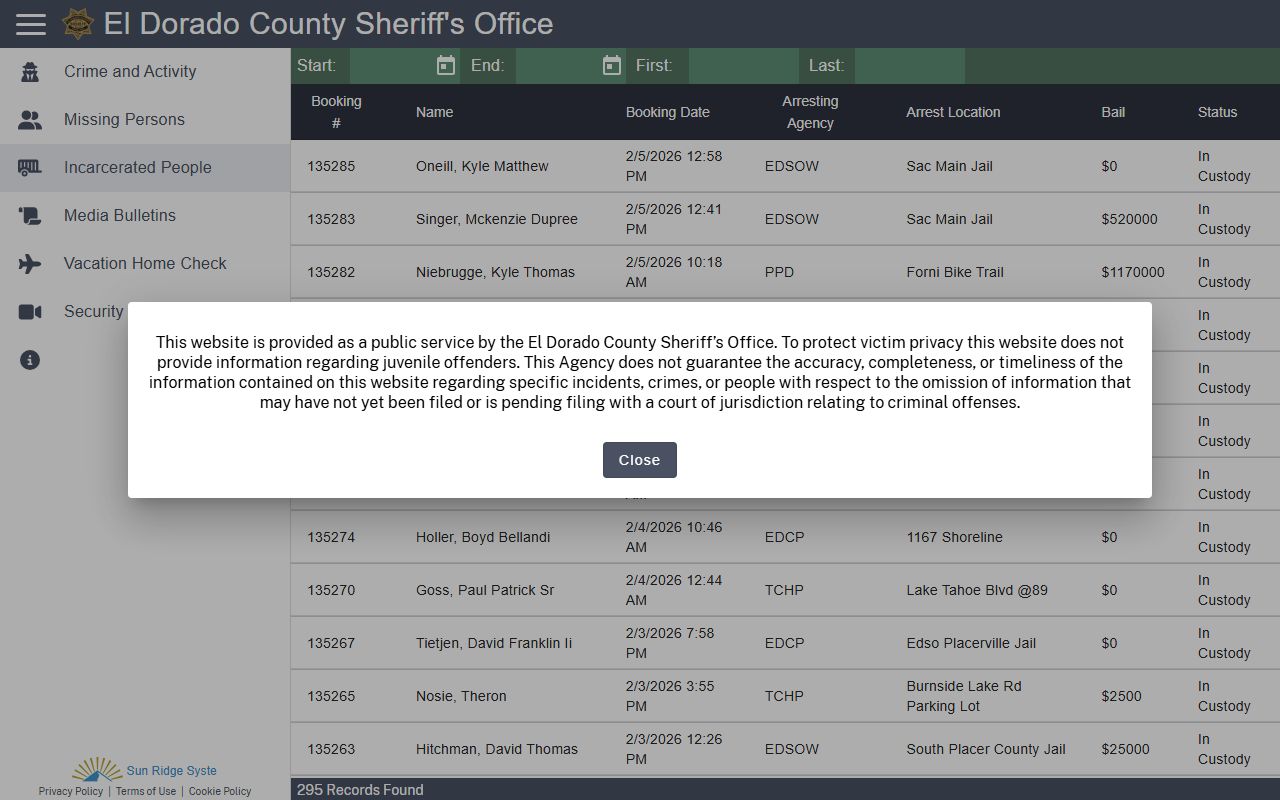
CitizenRIMS is the official lookup tool for El Dorado County. It connects to the jail management system, so data is current and accurate. Use it as your first step when searching for someone in county custody.
When someone gets arrested in El Dorado County, they go through a booking process at one of the detention facilities. Staff collect personal info, take fingerprints and photos, and log all arrest details. The booking record includes the person's name, physical description, date of birth, arrest time and location, booking time, charges filed, bail amount, and any warrants or probation holds.
California law requires most booking info to be public. Government Code Section 7923.610 lists what agencies must disclose, except in cases where it could endanger someone or interfere with an investigation. El Dorado County follows state law. You can get booking records through the online search or by requesting them from the Sheriff's Records Division.
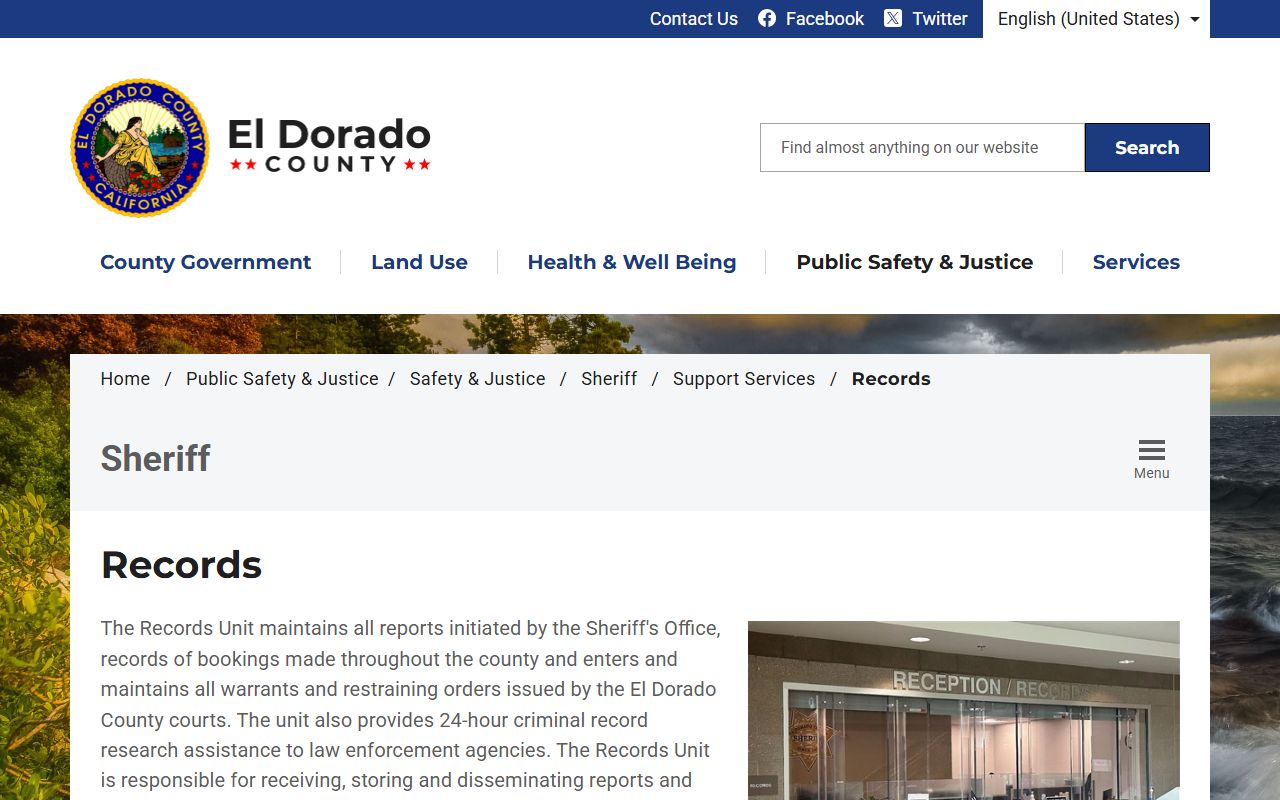
The Records Division handles all requests for arrest reports, booking logs, and related documents. They're part of the Support Services team at the El Dorado County Sheriff's Office. If the online tools don't have what you need, this is where you submit a formal request.
Check the El Dorado County Sheriff's Records page for more info. You'll find instructions on how to request records, what types of documents are available, and how to contact the division. The page also lists fees and processing times. Staff can answer questions about record availability and help you fill out request forms.
The Records Division keeps files on every booking at both detention facilities. They can search by name, date, or case number. How fast you get results depends on the complexity of your request and how busy the office is.
Release records show when someone got out of jail and why. People are released for various reasons. Common ones include posting bail, serving the full sentence, getting charges dismissed, or a judge ordering release on own recognizance. Some releases happen because of time credits earned through good behavior or work programs.
You can check if someone was released by searching the online inmate database. If they're not listed as a current inmate, they may have been let go. For exact release dates and details, contact the detention facility or Records Division. Release information is public under the same laws that govern booking data.
Note: Alpine County contracts with El Dorado County for jail services, so you might find Alpine County arrestees in the El Dorado system.
If you need records not available online, file a public records request. El Dorado County handles these under California's Public Records Act. You submit your request in writing, describing what you want. The agency has 10 days to respond under state law. They may need more time for large or complex requests.
You can ask for booking logs, arrest reports, release records, or other jail documents. Some info might be exempt, like active investigations or sealed cases. But most booking and release data is public. The county may charge for staff time and copying, though fees must be reasonable and based on actual costs.
California's Public Records Act requires government transparency. Government Code Section 7923.600 lists exemptions for certain investigatory files, but booking logs are generally not exempt. Penal Code Section 11105 governs state-level criminal history records maintained by the Department of Justice, which have stricter access rules than local booking records.
Penal Code Section 13125 sets standards for what data must be collected during arrests. This law ensures all California counties record booking info the same way. It lists minimum requirements for personal identifiers, arrest details, charges, and case outcomes. This consistency makes it easier to track and share data across jurisdictions.
For people in state prison, use the California Incarcerated Records & Information Search. This is the official state inmate locator run by the California Department of Corrections and Rehabilitation. It only shows state prison inmates, not county jail detainees. If someone was transferred from El Dorado County Jail to a state facility, they'll appear in CIRIS instead of the local system.
CIRIS requires a CDCR number or full name to search. It shows state prison commitments, parole hearing dates, and release info for state inmates. It won't help you find someone in county jail, so check both systems if you're unsure where they are.
The online inmate search covers current and recent bookings. For older records, contact the Records Division. They keep archives of past booking logs and arrest reports. Specify the name, date range, and type of record you need. Staff will search their files and tell you what's available.
Some old records are on paper. Others are in electronic databases. How fast you get results depends on how the records are stored and how busy the office is. Expect longer wait times for very old or obscure records. The county has been using digital systems for years, so recent records should be accessible without much delay.
El Dorado County operates two main detention facilities. One is in Placerville, the county seat. The other is in South Lake Tahoe. Both facilities book and house arrestees. When you search the online database, it shows which facility is holding the inmate. This is important if you need to visit or send mail.
The county also provides jail services for Alpine County, which doesn't have its own jail. If someone was arrested in Alpine County, they might be housed in an El Dorado County facility. The online search will show them, but their records will reflect the Alpine County arrest.
The El Dorado County Sheriff's Office has locations in Placerville and South Lake Tahoe. They handle all inquiries about jail records, bookings, and releases. You can call, visit in person, or submit requests by mail or online. Staff can guide you through the process and explain what records are public.
For quick questions about an inmate's status, try the online search first. If that doesn't work, call the detention facility directly. They can confirm if someone is in custody and give basic info over the phone.
If you're searching for someone who might be in a nearby county, try these resources:
Each county has its own inmate search system. Some use CitizenRIMS like El Dorado County, others use different platforms. Always check the local Sheriff's Office website for the right search tool.