
Find California Bookings and Releases
California maintains booking and release records through county sheriff offices and the California Department of Corrections and Rehabilitation. You can search for inmate information online using county jail databases and the state prison locator. Most counties offer free access to booking logs that show recent arrests. Release dates and current custody status appear in these systems. State law requires agencies to disclose specific arrestee details to the public under Government Code section 7923.610.
California Bookings & Releases Quick Facts
California Inmate Search Systems
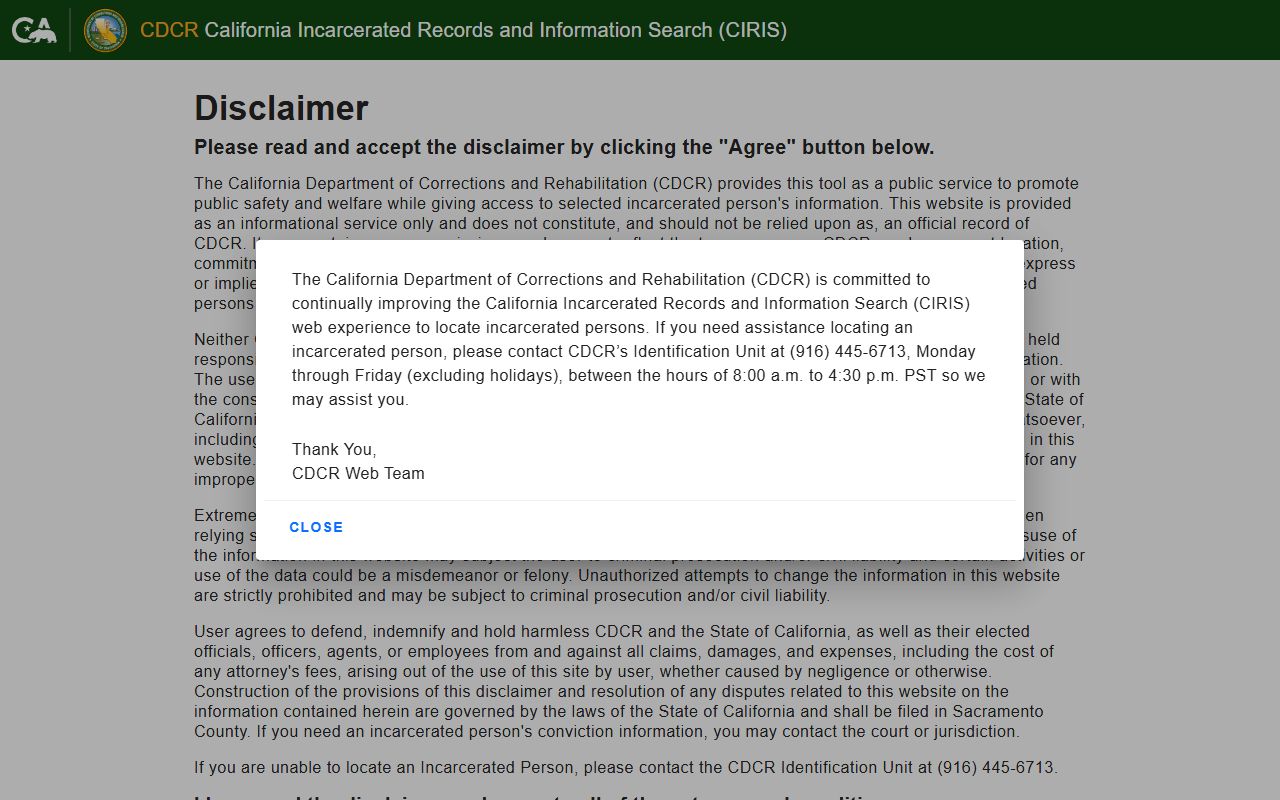
The California Incarcerated Records and Information Search is the main tool for state prison inmates. CIRIS lets you look up people in CDCR custody. Search results show the name, CDCR number, age, and location. You also see commitment counties and admission dates. Board of Parole Hearing dates appear when scheduled. The system updates daily with new bookings and releases from all state prisons in California.
CIRIS requires either a CDCR number or last name to search. You can reach the California Inmate Identification Unit at 916-445-6713 for help. The database covers everyone currently held in state prison. It does not show county jail bookings or releases. For county custody information, you need to check the sheriff office in each county where the booking occurred.
Each county in California runs its own jail booking system. These databases show recent arrests and current inmates. Most update in real time as bookings happen. Sheriff offices across California use different software platforms. Some counties post daily or weekly booking logs as PDF files instead of searchable databases.
County systems typically include full name, booking date and time, charges, bail amount, and location held. Physical description data appears in many systems. You can find date of birth, height, weight, hair color, and eye color. Release status shows when someone left custody. Pending release means the person has started the discharge process but remains in the facility.
Public Access to Booking Records
California law mandates disclosure of arrest information. Government Code section 7923.610 requires law enforcement to make public specific arrestee data. This includes full name and occupation, physical description, time and date of arrest, booking time and date, location of arrest, factual circumstances, bail amount, release information, and all charges including warrants and holds.
The statute became effective January 1, 2023. It replaced prior law to expand public access to booking records. Agencies can withhold information only when disclosure would endanger someone involved in an investigation or compromise the investigation itself. This exception applies narrowly and does not allow blanket withholding of booking data in California.
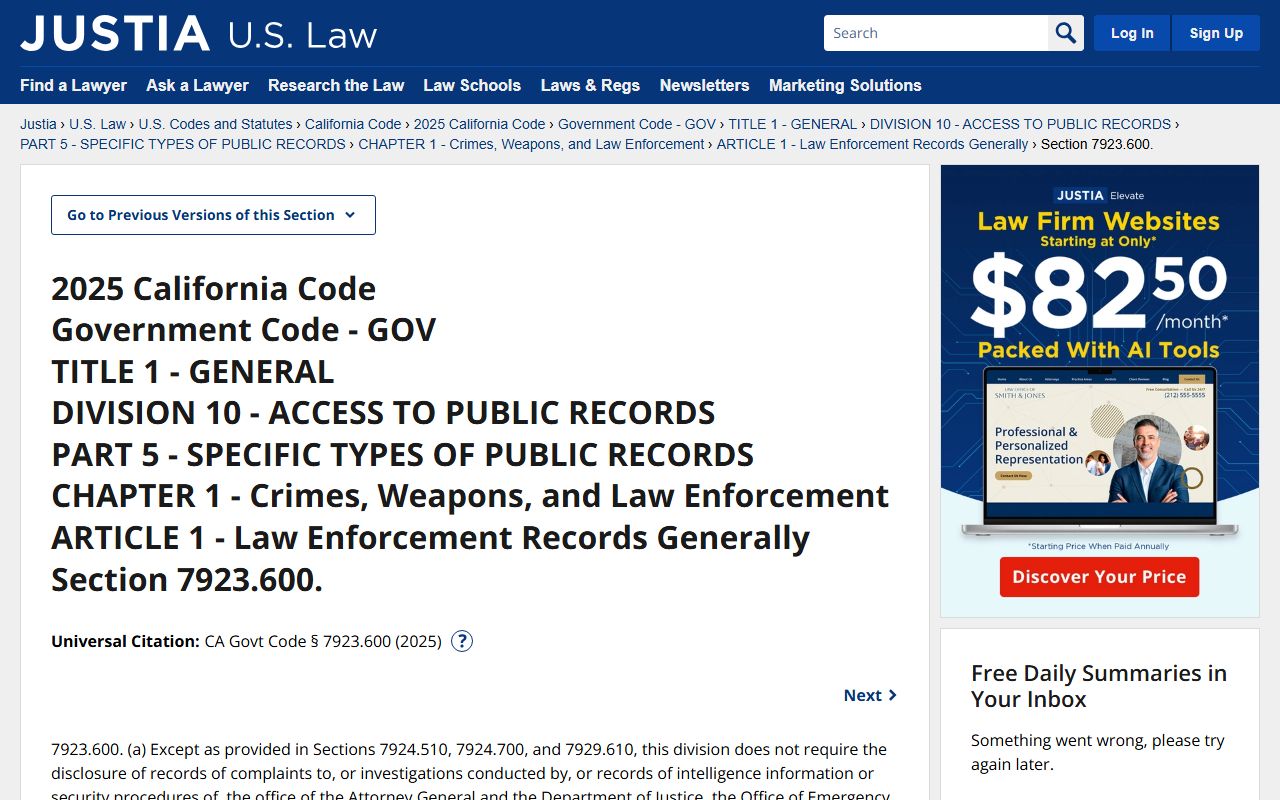
Government Code section 7923.600 exempts certain law enforcement records from disclosure. Investigatory files remain confidential during active investigations. But basic booking information must still be disclosed under section 7923.610 even when an investigation continues. The two statutes work together to balance transparency and investigative needs across California.
Jail Population Data and Reports
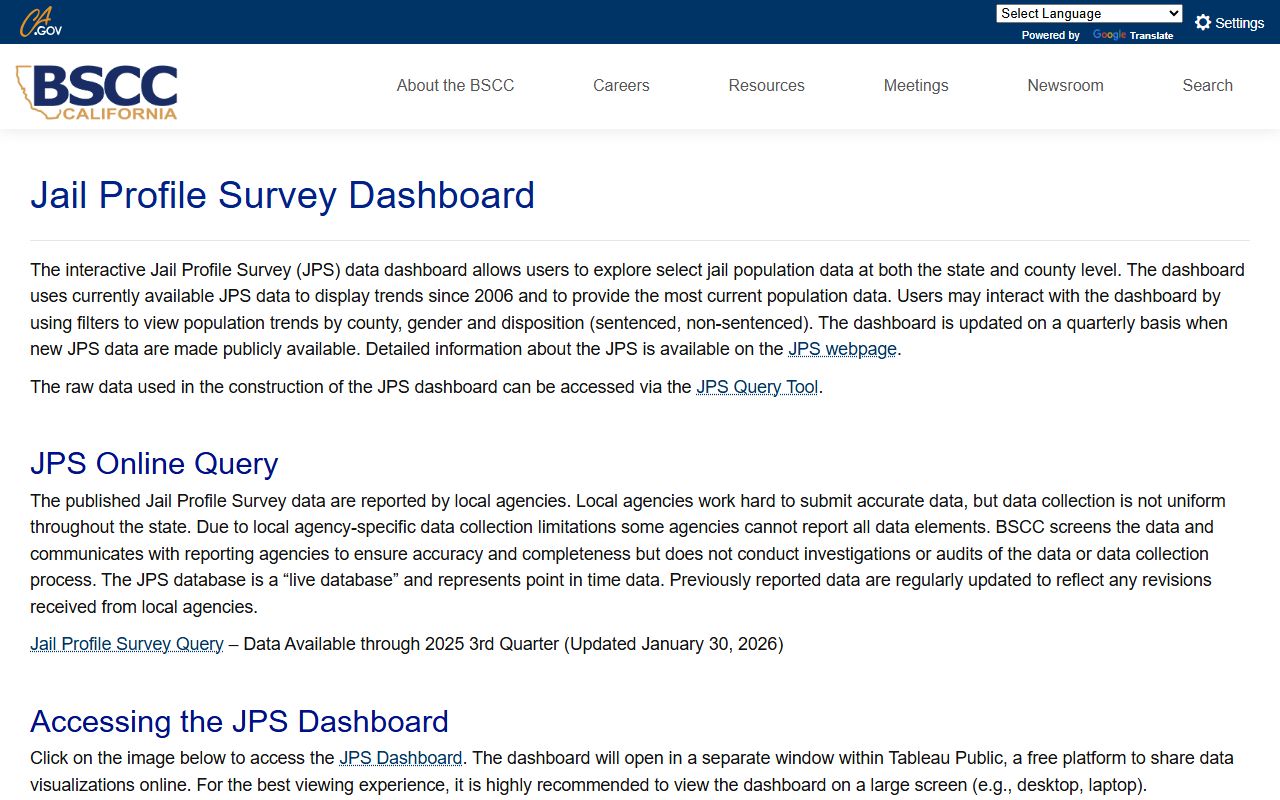
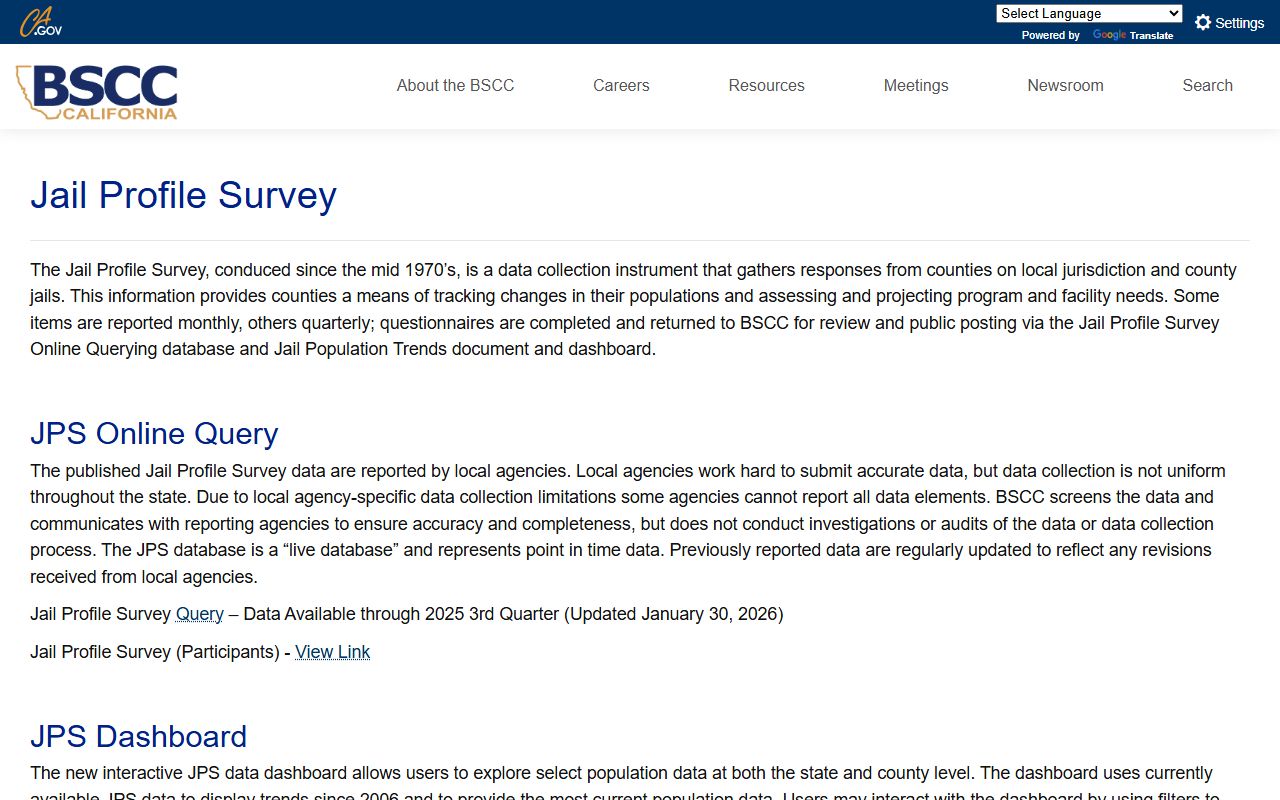
The Board of State and Community Corrections collects data from all California county jails. The Jail Profile Survey has run since the mid 1970s. Counties report facility capacity, population counts, and demographic information. Some items are reported monthly and others quarterly. BSCC reviews the data and posts it publicly through an online query database and dashboard.
You can access the Jail Profile Survey query tool at the BSCC website. Select facility level data, monthly county data, or quarterly statistics. The system covers reporting from 2002 forward. Earlier data exists for periods through 2001. This information helps counties track population changes and plan for facility needs in California.
BSCC makes every effort to review data for accuracy. The board cannot be responsible for reporting errors made at the county level. Data may contain inaccuracies submitted by individual counties. Use the information as a general reference for jail population trends across California rather than as precise counts for legal purposes.
Access to Criminal History Records
Criminal history summary records differ from booking logs. The California Department of Justice maintains statewide criminal history data. Access to these records is restricted by law. Only law enforcement, authorized agencies, and the subject of the record can request them. Penal Code section 11105 governs this access in California.
Individuals have the right to request their own criminal history record. You must submit fingerprints and pay a $25 fee to DOJ. California residents must use Live Scan fingerprinting. Out of state residents can submit manual fingerprint cards. The process takes 2 to 3 days for most records. Complex records may take up to 2 weeks to process.
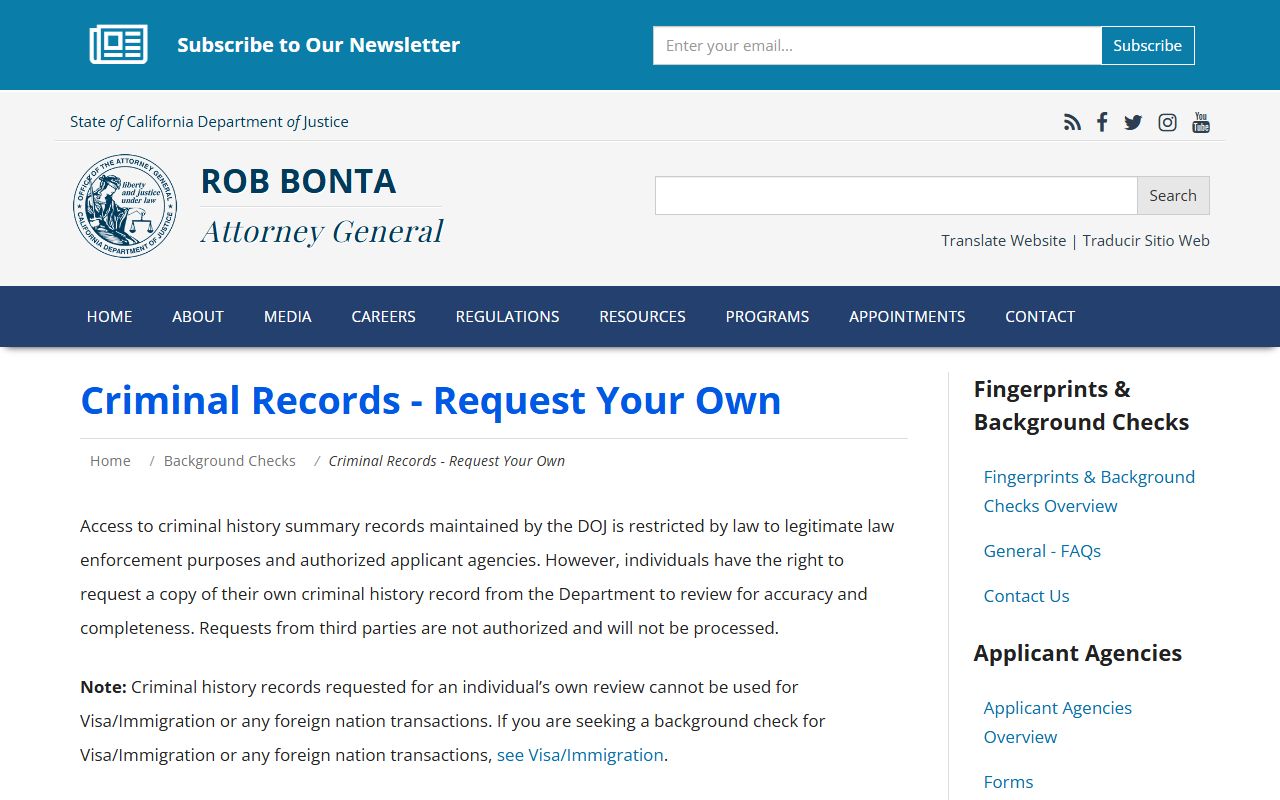
Third party requests are not authorized and will not be processed. Penal Code section 13125 sets minimum data standards for arrest documentation. This statute specifies what information agencies must record. Personal ID data includes name, aliases, date of birth, and physical description. Arrest data covers agency, booking number, date, charges, and dispositions.
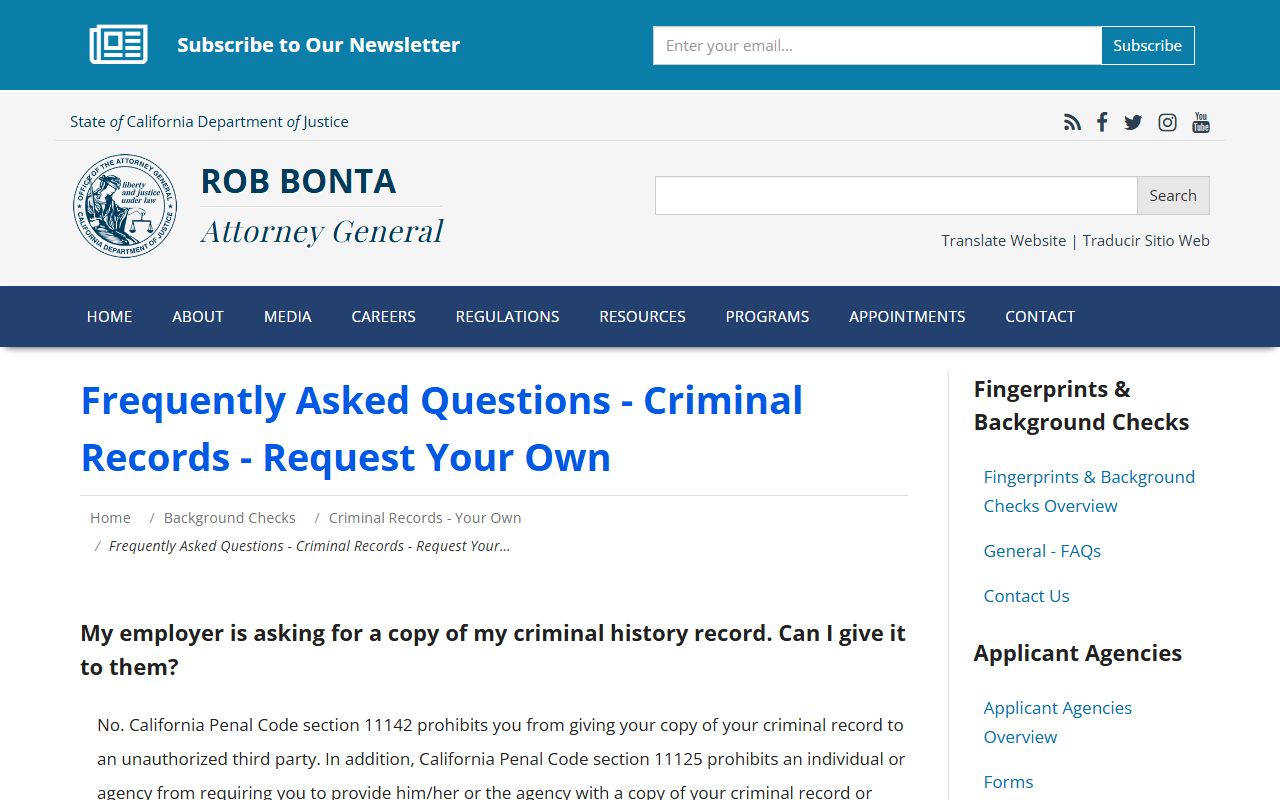
You cannot give your criminal record copy to an employer or other third party. California Penal Code section 11142 prohibits this. Penal Code section 11125 prohibits anyone from requiring you to provide your record or proof that one does or does not exist. Violation of either section is a misdemeanor offense in California.
Correcting Inaccurate Records
You can challenge your criminal history record if information is wrong or incomplete. Penal Code sections 11120 through 11127 establish the review and challenge process. You must first receive a copy of your record from DOJ. Form BCIA 8706 comes with your record. This is the Claim of Alleged Inaccuracy or Incompleteness form you use to submit challenges in California.
Arrest and court information can only be changed by court order or direction from the arresting agency or district attorney. DOJ is required to record information when submitted by law enforcement or a court. The department cannot modify or delete entries on its own authority. The record retention policy maintains criminal history information until the subject reaches 100 years of age.
Booking records at the county level may also contain errors. Contact the sheriff office that made the booking to request corrections. Provide documentation that shows the error. Each county has its own process for reviewing and correcting booking records in California.
Requesting Booking and Arrest Reports
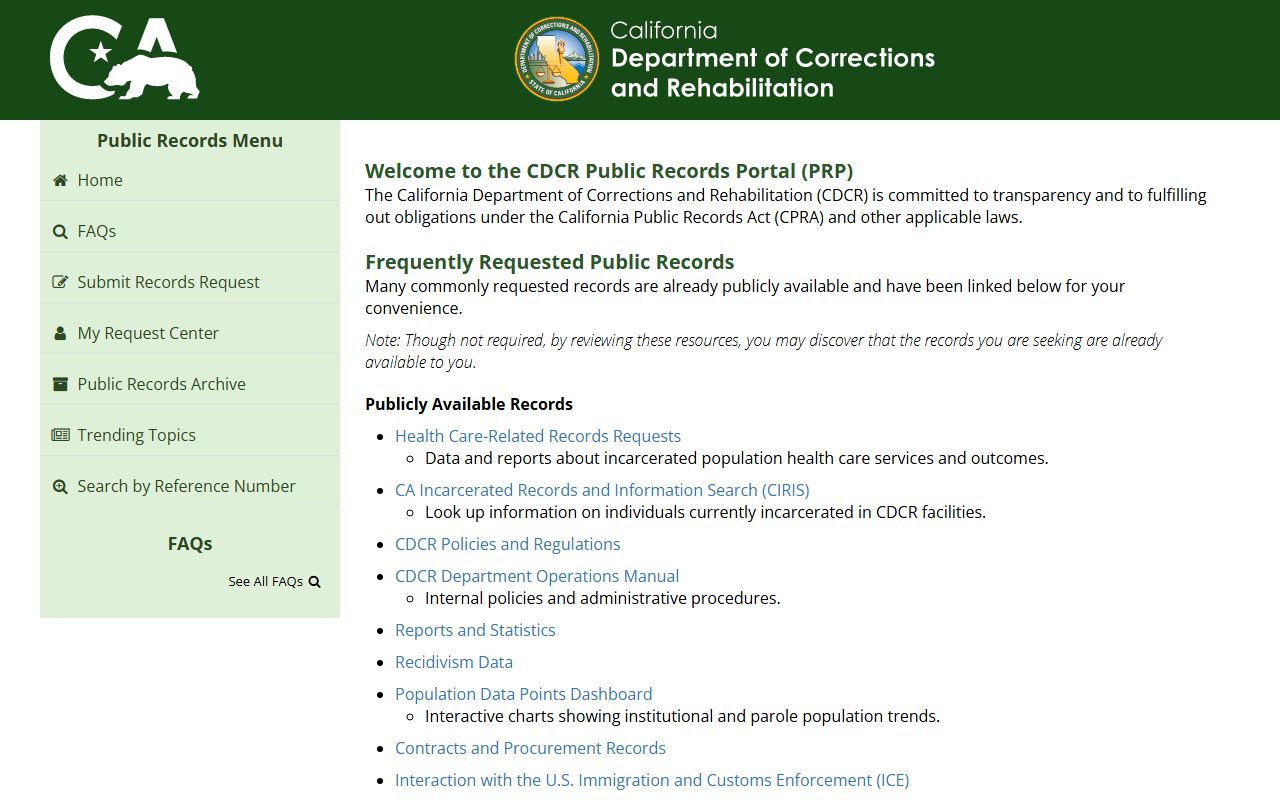
CDCR operates a public records portal through GovQA. You can submit requests online to track them through the system. You may also make requests by U.S. mail, email, fax, or phone. Staff will manually enter these requests into the portal. Creating an account lets you manage your request online and receive updates as CDCR processes it.
County sheriff offices handle requests for jail booking records under the California Public Records Act. The act requires agencies to respond within 10 days. They may extend the deadline by 14 days for unusual circumstances. Fees are limited to direct costs of duplication. Some counties use online portals while others accept requests by mail or email.
When requesting booking records, include the full name of the person, approximate booking date, and the county where booking occurred. More specific information helps staff locate records faster. Be clear about whether you want booking logs, arrest reports, or other specific documents related to the booking in California.
How Counties Handle Bookings
Large counties operate multiple jail facilities. Los Angeles County runs the largest jail system in California with several detention centers. Smaller counties may contract with neighboring counties for jail services. Alpine County has no jail facility and contracts with El Dorado County and Calaveras County for custody services.
Some counties post booking logs on their websites daily. Others update searchable databases continuously as new bookings occur. A few counties provide weekly PDF reports instead of online search tools. The level of detail varies by county. Most include charges, bail, and booking time. Some add mugshots and detailed physical descriptions in California.
Cities do not operate jails in California. City police departments book arrestees at the county jail. Residents of major cities should check the county sheriff database for booking and release information. The county that serves your city handles all custody records even when a city police agency made the arrest.
Victim Notification Services
VINE is Victim Information and Notification Everyday. This free service notifies victims about custody status changes. You can register by phone or online. The system sends alerts when an inmate is released, transferred, or has a court date. Many California counties participate in VINE. Check with your county sheriff to confirm availability in your area.
Browse California Bookings by Location
County Sheriff Offices
Each county sheriff operates its own booking system. Select a county below to find local jail records and inmate search tools.
View All 58 California Counties →
Major California Cities
City residents file with their county sheriff office. Choose a city to learn where booking records are kept in your area.